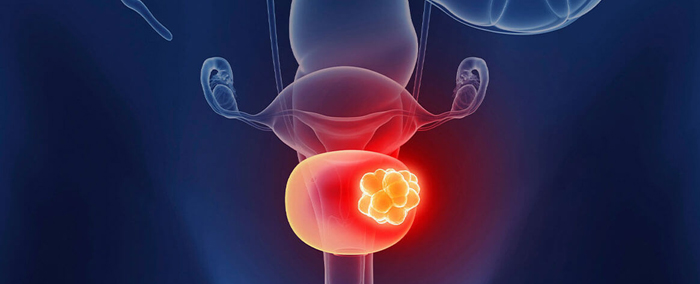
Bladder cancer develops in the cells lining the bladder, the organ responsible for storing urine. It is among the most common urological cancers, affecting both men and women, though men are at higher risk. The most frequent type is urothelial carcinoma, which begins in the lining of the urinary tract. Bladder cancer can range from superficial tumors limited to the bladder lining to more invasive cancers that spread into the muscle wall and beyond.
A major risk factor for bladder cancer is smoking, which contributes to nearly half of all cases. Harmful chemicals from tobacco smoke enter the bloodstream, travel to the kidneys, and are excreted into the urine, where they irritate the bladder lining. Other risk factors include exposure to industrial dyes and chemicals, chronic bladder infections, long-term catheter use, radiation therapy, advancing age, and family history. Individuals with a history of schistosomiasis (a parasitic infection) are also at increased risk in certain regions.
Symptoms of bladder cancer often appear early, making timely diagnosis possible. The most common symptom is blood in the urine, which may be visible or microscopic. Other signs include frequent urination, pain or burning while urinating, lower abdominal discomfort, and difficulty emptying the bladder. However, these symptoms may also be associated with infections or bladder stones, so medical evaluation is essential.
Diagnosis involves urine tests, imaging studies such as ultrasound or CT scan, and cystoscopy, where a small camera is inserted through the urethra to visualize the bladder interior. During cystoscopy, a biopsy can be taken to confirm cancer. The stage and grade of the tumor help determine treatment options.
Treatment depends on whether the cancer is non–muscle-invasive or muscle-invasive. Non–muscle-invasive bladder cancer is usually treated through transurethral resection (TURBT) followed by intravesical therapy such as BCG or chemotherapy instilled directly into the bladder. This approach helps prevent recurrence and progression.
For muscle-invasive bladder cancer, treatment options include surgery to remove the bladder (cystectomy), chemotherapy, radiation therapy, or a combination of modalities. Advances in immunotherapy have also improved outcomes for patients with advanced or metastatic disease.
Because bladder cancer has a high recurrence rate, long-term follow-up with regular cystoscopy is essential. Preventive measures include avoiding smoking, staying hydrated, and reducing exposure to harmful chemicals. Early detection and proper management help achieve excellent treatment outcomes.