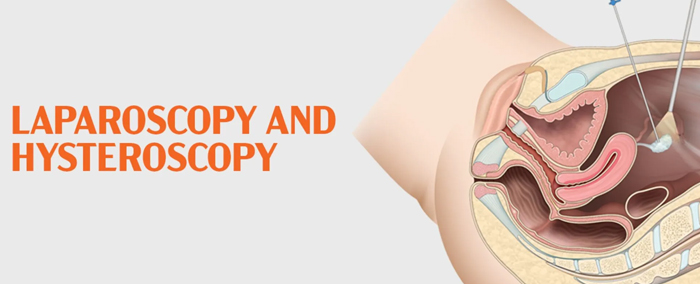
Laparoscopy and hysteroscopy are minimally invasive surgical procedures widely used in gynecology to diagnose and treat various female reproductive system conditions. These techniques have revolutionized women’s healthcare by offering less invasive alternatives to traditional open surgeries, leading to faster recovery, reduced pain, and minimal scarring.
Laparoscopy, often referred to as “keyhole surgery,” involves making small incisions in the abdomen through which a thin, lighted instrument called a laparoscope is inserted. This instrument is equipped with a camera, allowing the surgeon to view the pelvic organs, including the uterus, ovaries, fallopian tubes, and surrounding structures, on a high-resolution monitor. Laparoscopy is commonly used to diagnose conditions such as endometriosis, ovarian cysts, fibroids, pelvic inflammatory disease, and unexplained infertility. It is also employed therapeutically to remove cysts or fibroids, perform tubal ligation, and manage ectopic pregnancies. The advantages of laparoscopy include minimal blood loss, shorter hospital stays, faster recovery, and reduced postoperative discomfort compared to open surgery.
Hysteroscopy, on the other hand, focuses on the interior of the uterus. A hysteroscope, a thin tube with a camera and light source, is inserted through the vagina and cervix into the uterine cavity. This procedure allows direct visualization of the uterine lining, making it invaluable for diagnosing and treating conditions such as abnormal uterine bleeding, polyps, fibroids, adhesions (Asherman’s syndrome), and congenital uterine anomalies. Hysteroscopy can also be used to remove retained products of conception, insert intrauterine devices, or perform endometrial biopsies. Like laparoscopy, hysteroscopy is minimally invasive, requires only a short recovery period, and avoids abdominal incisions.
Both laparoscopy and hysteroscopy are performed under anesthesia and are generally safe, with complications being rare when conducted by experienced specialists. They allow precise diagnosis and targeted treatment, preserving reproductive potential and improving overall gynecological health. These procedures are increasingly preferred due to their efficiency, safety, and patient-friendly outcomes.
In summary, laparoscopy and hysteroscopy represent advanced, minimally invasive approaches in modern gynecology, offering women effective solutions for both diagnostic evaluation and surgical treatment of reproductive system disorders, all while minimizing recovery time and postoperative discomfort.